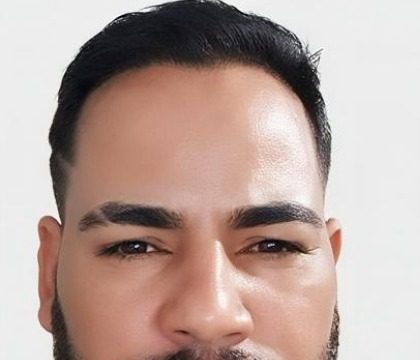
A hairline hair transplant is one of the most delicate and impactful forms of hair restoration. The hairline frames the face and plays a key role in overall facial balance, expression, and confidence. Even small inaccuracies in hairline position, shape, or density can significantly affect how natural the final result appears.
For this reason, hairline hair transplant surgery requires not only technical skill, but also medical expertise, aesthetic judgement, and careful long-term planning.
What Is a Hairline Hair Transplant?
A hairline hair transplant focuses specifically on restoring or reshaping the frontal hairline using transplanted hair follicles. The goal is to recreate a natural-looking hairline that blends seamlessly with existing hair while remaining appropriate for the patient’s age and facial structure.
Rather than aiming for excessive density or unnaturally low hairlines, a professional hairline transplant prioritises soft transitions, irregular contours, and realistic proportions.
Why Hairline Design Is Critical
The success of a hairline hair transplant depends largely on the design phase. A well-designed hairline should:
Follow natural facial proportions
Reflect age-appropriate positioning
Avoid straight or artificial shapes
Blend naturally with existing hair
Remain realistic as hair loss progresses
Poor hairline planning can result in unnatural appearance, overuse of donor hair, and dissatisfaction over time — even if graft survival is technically successful.
Our Personalised Hairline Hair Transplant Approach
Every hairline hair transplant begins with a detailed medical consultation and facial analysis. Our team carefully evaluates:
Forehead height and facial symmetry
Existing hair density and direction
Hair loss pattern and future progression
Donor area quality and availability
Patient expectations and lifestyle
This personalised planning ensures the hairline looks natural today and continues to look appropriate in the future.
Natural Hairline Principles We Follow
To achieve realistic results, we apply proven aesthetic and medical principles:
Soft, irregular hairline contours to mimic natural growth
Gradual density increase behind the frontal hairline
Correct graft angle and direction for natural movement
Strategic graft distribution rather than overpacking
Ethical donor management to preserve future options
These details are what separate natural-looking results from artificial or obvious transplants.
The Hairline Hair Transplant Procedure
Hairline restoration is typically performed using modern FUE or DHI techniques, depending on individual needs.
1. Consultation & Hairline Design
The hairline is carefully designed with patient input and medical expertise, considering facial proportions and long-term outcomes.
2. Follicle Extraction
Healthy hair follicles are extracted individually from the donor area using advanced techniques to minimise trauma.
3. Precision Implantation
Each graft is implanted with precise control over depth, angle, and direction to replicate natural hair growth patterns.
4. Stabilisation & Healing
Grafts are secured to ensure strong survival and smooth healing.
Recovery & Results
Recovery after a hairline hair transplant is generally well-tolerated:
Mild redness and scabbing resolve within 7–10 days
Temporary shedding (shock loss) may occur
New hair growth begins around 3–4 months
Density and definition improve over 6–9 months
Final, mature results appear within 12–18 months
Once fully grown, the transplanted hair behaves like natural hair and can be cut, styled, and managed normally.
Who Is Suitable for Hairline Hair Transplant?
Hairline hair transplant is suitable for patients who:
Have a receding or uneven hairline
Want to restore facial balance
Seek natural, age-appropriate results
Have sufficient donor hair
Prefer ethical, long-term planning
A professional consultation is essential to determine suitability and the most appropriate technique.
Why Choose Our Clinic for Hairline Hair Transplant?
✔ Doctor-led consultation and planning
✔ Advanced FUE & DHI techniques
✔ Ethical graft usage and donor preservation
✔ Natural, realistic hairline design
✔ Comprehensive aftercare and follow-up
Our focus is not just restoring hair — but restoring confidence with results that look natural and stand the test of time.
Restore Your Hairline with Confidence
A hairline hair transplant is the foundation of natural hair restoration. With expert planning, medical supervision, and precise execution, it can transform appearance while remaining subtle and realistic.
Book your consultation today and take the first step toward a natural, confident hairline.